Electrical Defect Recognition
Spot the electrical problems that cause fires, arc flash and outages before they do, and know exactly what to do next. For data centers and critical facilities.
Built for the people who walk electrical rooms
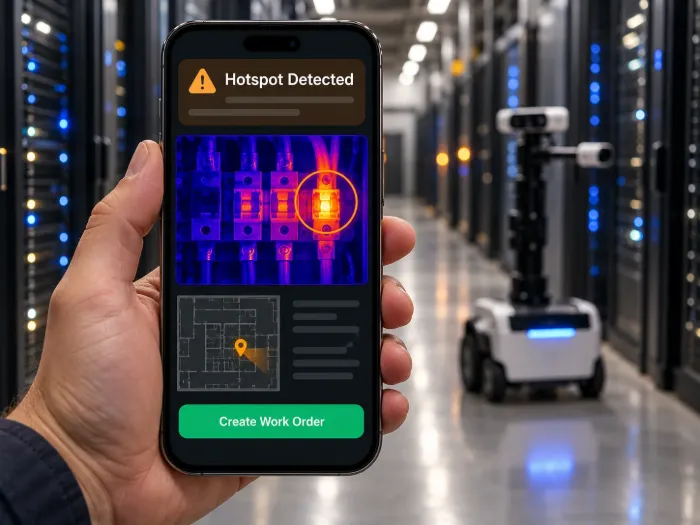
Look at a photo and a thermal image of electrical gear, name the defect, rate how urgent it is and say who to call.
No camera, meter or live gear needed. Just basic electrical vocabulary: breaker, panel, phase, load.
Course units
Ten units in three parts, about 5 hours of short video plus about 4 hours of image drills.
Foundations
How equipment fails, how to look and how to read a thermal image.
Start here
What the course is and is not, how to learn from images, and safety first: never open energized gear to look.
How Electrical Equipment Fails
The failure chain behind every defect, from a loose connection to a fire.
Seeing Like an Inspector
A visual walk method anyone can repeat, with covers on.
Reading a Thermal Image
Recognize real hot spots and rule out false alarms. Recognition, not measurement.
Equipment
Defect by defect, across the gear in data centers and critical facilities.
Switchgear and Panelboards
Hot terminals, loose lugs, phase imbalance and the rest of the switchgear room.
Busway, PDUs, RPPs, Cables and Terminations
Where power reaches the racks, and where it fails.
UPS, Batteries, Transformers and Emergency Power
The backup chain, including what lithium ion battery rooms demand.
Build and Handover Checks
Catch installation defects before power on, when they are cheapest to fix.
Judgment and action
Turn what you see into the right action, and know good evidence when you get it.
Severity, Escalation and Writing a Finding
Rate urgency, pick the right action and write a finding anyone can act on. The core of the course.
Reviewing a Contractor’s Inspection Report
Know whether a report you paid for is good evidence.
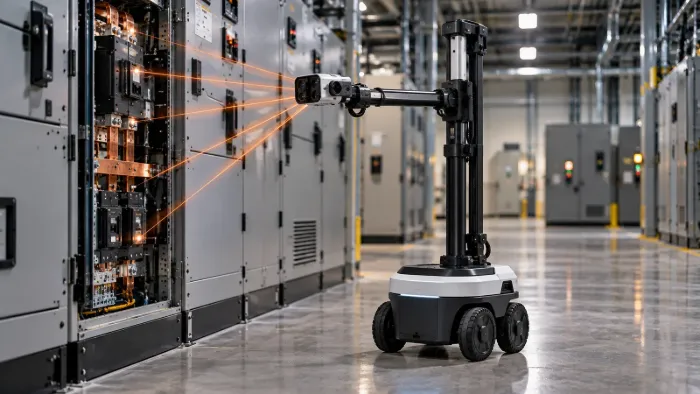
Where Robots and Sensors Fit
Optional: how robotic rounds and fixed sensors capture the same evidence on a schedule.
How you learn
Built around practice on real images, not lectures about defects.
Images first
Every lesson opens with a real photo or thermal image and one question: what is wrong here, and how bad is it?
Visual and thermal pairs
Every image comes as a pair, with load, ambient temperature and equipment type, because nobody should judge a thermal image without context.
Practice, not just video
About 40% of the time is hands-on drills, mixed across equipment, with earlier defects coming back later.
Hard look-alikes
Reflections, sunlight, normally warm parts and lightly loaded circuits. Knowing what is not a defect matters as much as knowing what is.
AI coach and simulation
A coach that explains why an answer is right or wrong, and a virtual electrical room where you walk a route and write findings.
Job aids you keep
A pocket defect guide, an escalation card and a report review checklist, ready to print.
Capstone and skills record
About 90 minutes, three parts. Passing earns a verified skills record you can share.
Name the defect, mark where it is, rate severity and pick the action. About 15% are deliberate false alarms.
Find the weaknesses planted in a sample contractor thermography report.
Write three findings from given images, graded for location, evidence, severity, action and who was told.
Scope
Supplemental training and skills preparation. The course teaches recognition, triage and escalation from images and records. It does not qualify anyone to open energized equipment, perform thermography, sign off an inspection or certify compliance. Learners always escalate to a qualified person. The skills record is not a thermography certification or inspector qualification.
See all offerings. FacilityOps AI is a d/b/a of RoboSkill Inc., Houston, Texas.