Your building whispers before it breaks.
A warm wire. A slow drip. A valve someone left shut. FacilityOps robots and sensors walk your critical rooms day and night and catch the whisper, so your team fixes a small thing instead of a big one.
Live today in HoustonTwo month pilotYour engineers stay in control
Five checks the robot makes at every stop.
The FacilityOps robot follows a set route through your electrical, mechanical and fire rooms. At each stop it takes the same five readings and compares them with the last visit, so your engineers see exactly what has changed.
Thermal imaging of electrical gear
A loose or corroded connection heats up long before it fails, and that heat cannot be seen with the eye. The robot images each panel with a thermal camera and flags any point running warmer than its last reading.
On each roundA thermal image of every panel on the route, compared with the round before.
dollars of equipment breakdown claims came from loose or bad electrical connections.
Source: Hartford Steam Boiler dataVisual checks of valves, gauges and clearances
Many serious failures start with something out of place: a sprinkler valve left closed after a repair, storage stacked in front of a panel, a fire door wedged open. The robot photographs each checkpoint from the same position every time, so anything that has moved stands out.
On each roundPhotos from the same spot at every checkpoint, compared side by side with the last visit.
Leak checks at floor level
Most water damage starts inside the building: a worn pump seal, a cracked fitting, a drain pan that overflows. In rooms nobody visits overnight, a slow leak can run for weeks. The robot lowers its camera and light to check under pumps, along pipe runs and into pits.
On each roundFloor level images under pumps, valves and pipe runs, nights and weekends included.
Acoustic checks of rotating equipment
Worn bearings and slipping belts change their sound weeks before they stop, and the early change is above the range of human hearing. The robot records pumps, fans and motors with ultrasonic microphones and flags any change from their normal sound.
On each roundAn ultrasonic recording at each pump, fan and motor, compared with its normal sound.
Air quality and gas detection
Gas leaks, escaping refrigerant and poor ventilation are invisible and often have no smell at first. Gas sensors pick them up well before a person would notice.
On each roundAir samples along the route, plus small sensor hubs in cabinets, shafts and pits that report around the clock.
Same leak. Very different week.
With FacilityOps
- 2:10 AMThe robot spots a slow drip under a pump.
- 2:11 AMThe on call engineer gets a text with a photo. Not urgent, so no one drives in.
- 9:00 AMAn engineer replaces the seal.
- Next roundThe robot checks the same spot. Dry.
One part. One hour.
Without
- Week 1The drip starts in a room no one visits at night.
- Week 2Water finds a gap in the floor.
- Week 3The ceiling below gives way.
A flooded floor below.
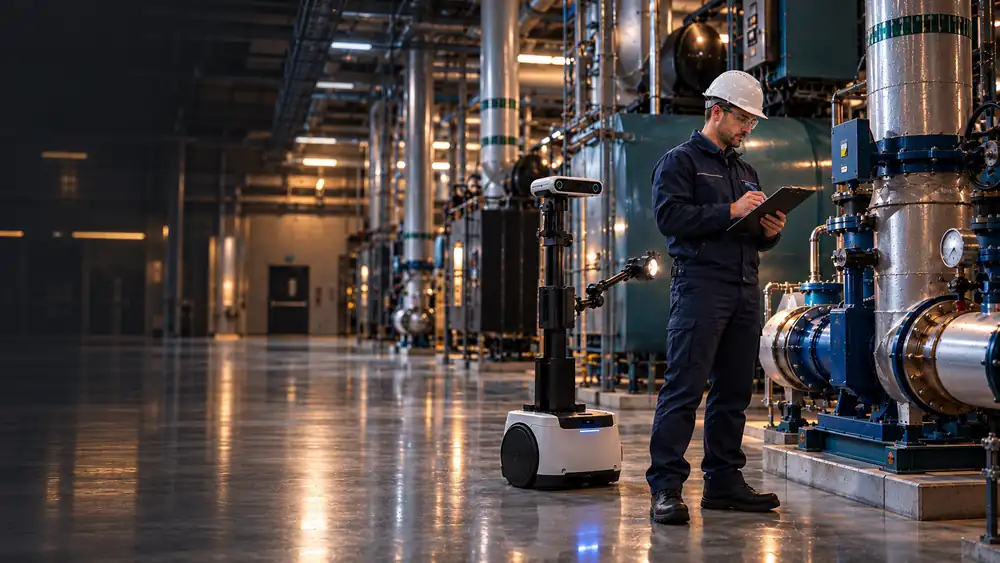
A teammate that takes the night shift.
The robot does the walking
The repetitive rounds, the 2 AM checks, the rooms no one has time for.
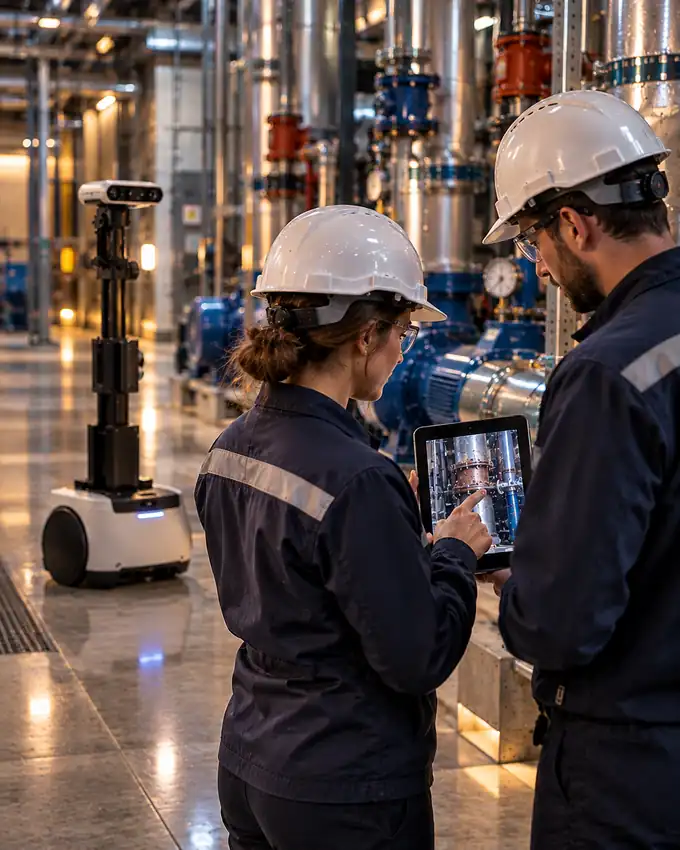
Your engineers make every call
They decide every action and do every repair. They can take manual control at any time.
We check the work, never do it
Before and after photos prove a repair was really finished. No vendor grading its own homework.
1 in 4 building maintenance workers is close to retirement age. FacilityOps keeps what they know on record. Source: BOMA
Small fixes, surprisingly big returns.
added building value from $100K more Net Operating Income a year, at a 6% cap rate.
Illustrative example, not a guaranteed result.FacilityOps AI is a d/b/a of RoboSkill Inc., Houston, Texas. Required testing and inspections continue as scheduled.